Anthropic Launches $150M Claude Corps Fellowship Program
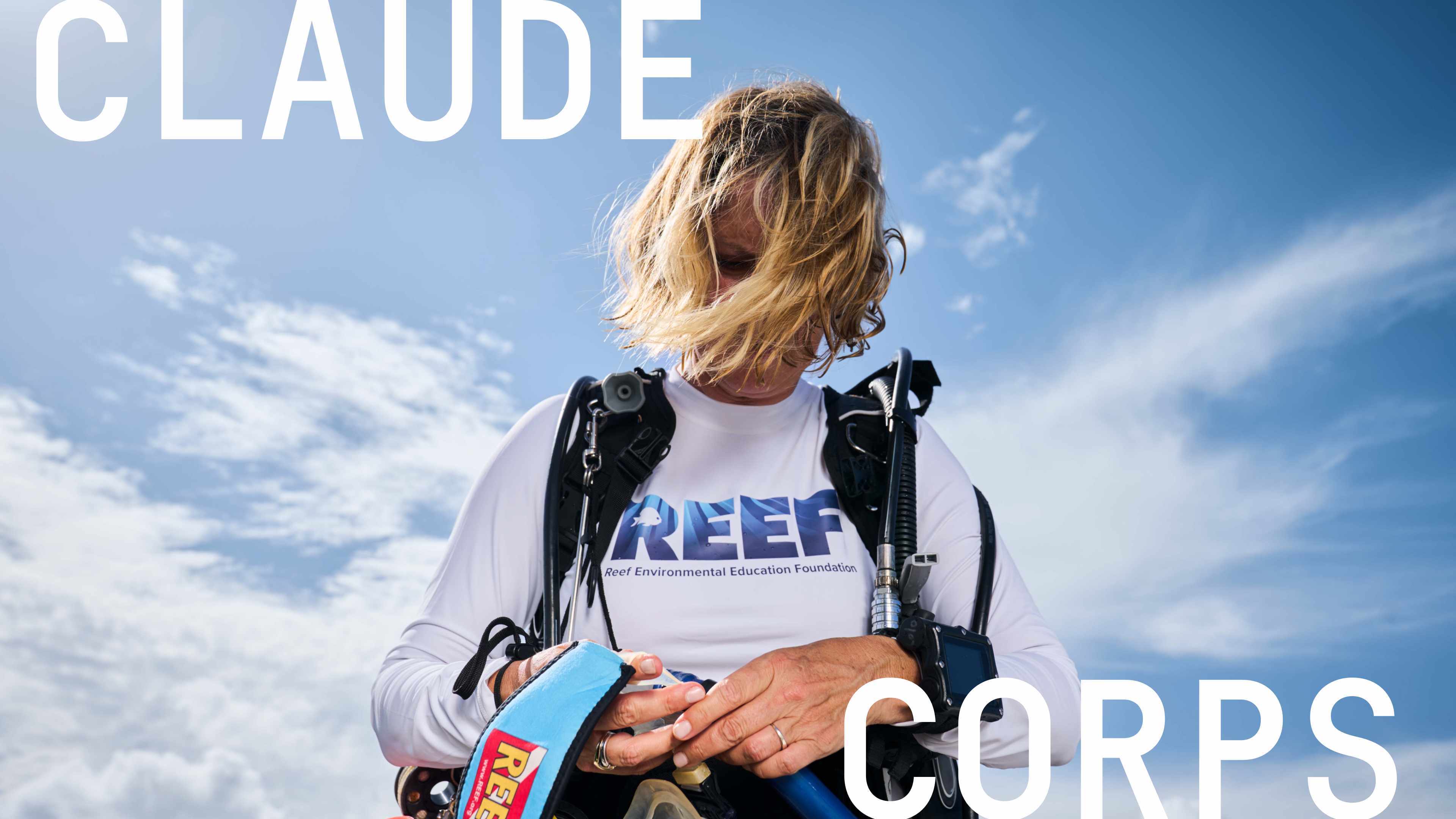
On June 11, 2026, Anthropic announced Claude Corps, a year-long national fellowship program that will recruit 1,000 early-career workers — paid $85,000 per year plus benefits — and place them at at least 400 American nonprofits over the next twelve months. The initial commitment is $150 million, managed by three organizations: Anthropic (funding, strategy, and technical expertise on Claude), CodePath (employer of record for fellows and intensive initial training), and Social Finance (impact measurement, evaluation, and a “financial vehicle” designed to scale the program).
It’s not an hackathon, an academic sponsorship, or a grant. It’s a one-year, full-time, in-person hiring of a thousand people who learn Claude well, get matched to a nonprofit, and work there for twelve months. The first cohort of 100 fellows opens applications on June 11 and closes on July 17, 2026; the first cohort starts in October 2026, the second in January 2027, the third in August 2027, on a rolling basis. Requirements: at least 18 years old, less than two years of full-time work experience, no degree required, authorization to work in the United States only.
What happened
The program stems from an explicit premise: “the benefits of transformative AI systems may come at the cost of significant disruption,” and “[c]ompanies building this technology have a responsibility to ensure the benefits are fully realized and widely shared, and to invest directly in the workers absorbing the change.” The announcement comes one day after the labor policy framework Anthropic published on June 10 — “Policy on the AI Exponential” — and, in the company’s own words, the two moves should be read together.
The model is simple and unambiguous. Each fellowship lasts 12 months. At the start, Anthropic and CodePath provide intensive Claude training in nonprofit contexts. Once placed in the host organization, fellows receive 5 hours per week of ongoing training, mentorship from a CodePath mentor, technical office hours from Anthropic, and a generous Claude token budget. Anthropic covers “salary, benefits, training, and ongoing support” — exactly the formula used on the program’s dedicated page. The host nonprofit provides the project and operational structure; the fellow’s budget is not its responsibility.
The dedicated page lists 19 host organizations: Code for America, International Rescue Committee, Goodwill Industries International, RAINN, StriveTogether, Year Up United, Pacific Community Ventures, YMCA of Greater Charlotte, YMCA of Greater Cincinnati, and others. This is not a showcase list: Code for America (gov-tech), International Rescue Committee (humanitarian), RAINN (survivor support), StriveTogether (place-based education), Pacific Community Ventures (underserved underwriting for small businesses), Goodwill Industries International (workforce) — these are substantive organizations with public missions consistent with AI tool use. Anthropic states that over the next twelve months, at least 400 nonprofits will host fellows, and that this is the first cohort of a program intended to “scale well beyond 1,000.”
Why it matters
First, it’s a positioning move in a dense week for Anthropic. The same month of June 2026 saw Anthropic release Fable 5 and Mythos 9 (June 9), publicly reverse course on invisible safeguards for Fable 5 (June 11), and publish the labor policy framework (June 10). Claude Corps is the other side of the same coin: Anthropic asks the government for regulatory power and simultaneously invests directly in the workers absorbing the transition. The two moves should be read as a coherent strategy, not as disconnected news. (On the Fable 5 safeguards front, coverage is in our story on the Claude Fable 5 invisible safeguards reversal, June 11, 2026.)
Second, the “operational model” is replicable, and Anthropic knows it. Three organizations, clean roles: who puts up the money (Anthropic), who manages the people (CodePath as employer of record — an idea that any lab, foundation, or large tech company can adopt to avoid building internal HR just for the program), who measures impact and builds the financial vehicle to scale (Social Finance). It’s an architecture, not a hackathon, and it’s worth studying for any reader.
Third, the open-source part is the most underrated. Anthropic doesn’t promise to release Claude, but promises to open-source “some of the core technologies and infrastructure that enable this program to work.” For anyone who has tried to build a similar program, the non-trivial technical part is: matching 1,000 candidates to hundreds of hosts, distributed onboarding training, LLM token usage tracking per organization and project, shared reporting. If Anthropic releases those pieces, it becomes a concrete toolkit, not an announcement.
What to watch
- The July 17, 2026 deadline for applications for the first cohort of 100 fellows. It’s the only “hard” date in the program: cohorts 2 and 3 are rolling (January 2027, August 2027), and the dates are planned, not confirmed.
- Open-source of the “core tech.” Anthropic states the intention, not the date. Watch
github.com/anthropics(and any public organization Anthropic may create) for first releases. - Additional partners. Today the partners are CodePath and Social Finance. If others emerge in the next 60-90 days (for example, a foundation open to international replicability, a topic Anthropic explicitly says it wants to explore), that’s an update.
- Independent confirmation of the 19 hosts. The list comes from Anthropic’s own website. As of June 13, 2026, no public denials have surfaced, but if any listed nonprofit denies participation, the article should be corrected.
- **Effect on the IPO narrative. Anthropic filed the confidential S-1 with the SEC on June 1, 2026. Societal benefit programs of this scale matter in the S-1 narrative and financial press coverage: it’s worth mentioning that the move sits in an IPO context, not predicting the effect.
- First-year results. Social Finance will handle measurement & evaluation. Anthropic will publish data on fellow outcomes, nonprofit outcomes, and cost per “mission dollar advanced.” Until then, there are no results: anyone declaring “Claude Corps works” before the first report is looking at the moon.
Risks and caveats
- It’s a temporary fellowship, not a permanent job. The program covers 1,000 fellows across 3 cohorts, full-time for 12 months each. Anthropic’s ambition is to “scale well beyond 1,000,” but “will scale” isn’t “has scaled.” Saying “Anthropic will create 1,000 jobs” is a simplification that readers may misunderstand.
- Anthropic covers the fellow, not the nonprofit’s operational budget. The distinction is technical but crucial: the nonprofit gains an extra person for a year, without paying them. The nonprofit’s operating budget remains the nonprofit’s responsibility. The model isn’t “Anthropic funds nonprofits” — it’s “Anthropic funds a person who works for a nonprofit.”
- The 19 listed organizations are Anthropic’s list, not an independent verification. The June 11 blog post names 9 with descriptions; the dedicated page lists 19 with cities. Use the dedicated page’s list, don’t mix the two sources.
- Cohort 2 and 3 dates are planned, not confirmed. Anthropic itself says “applications are open on a rolling basis for the next two cohorts” — that’s a plan, not a binding calendar.
- “$150M” is an initial commitment, not a cap. The post uses the word “initial.” That’s the keyword: starting figure, not ceiling.
- No comparison with other fellowships (Google.org Fellows, Microsoft AI for Good, OpenAI Residency, IBM SkillsBuild) is possible without primary sources describing those programs. An undocumented comparison becomes an opinion paragraph.
- As of June 13, 2026, no analogous program exists in the EU with the same architecture (full-time employment, external employer of record, independent measurement partner, early-career target). If the source isn’t there, the article says so: it’s more honest.
What to do
For nonprofit organizations and US/EU foundations. The question isn’t “can I apply to the first cohort” (the first cohort is US-only), but “is it replicable?” The three things to study are the role architecture (who puts up the money, who manages the people, who measures), the employer of record function (using an external partner, not building internal HR for the program), and the use of an independent measurement & evaluation partner. A local pilot with 5-10 well-matched fellows and measured outcomes is a credible first experimental step; a bulk purchase isn’t.
For AI labs and tech companies that want to build a similar program. The template is Anthropic + CodePath + Social Finance. The workflow order derived from the announcement is: (1) find an employer of record that isn’t your company — otherwise it becomes a retention program in disguise; (2) find an independent measurement & evaluation partner; (3) define the token budget and training cadence before the call, not after; (4) set the public reporting calendar from the start (otherwise “we’ll measure” becomes an empty word).
For those investing in just transition and training. Social Finance’s financial vehicle is the most interesting part: a mechanism that makes the program scalable beyond the initial donor’s funding. If similar mechanisms exist in the EU — social impact bonds, certain InvestEU instruments, regional outcome funds — they can be cited as parallels only if accompanied by primary sources. Otherwise, it’s a footnote.
Verdict
Claude Corps is a serious, well-designed move. It’s a national-scale proof of concept of how a frontier lab can take just transition seriously: the role architecture is clean, the partners are verifiable, the calendar is declared, and the open-source promise — at least partially — is a textbook ecosystem building move. It’s not perfect: the program is US-only, it’s only 12 months, and first-year results don’t exist yet. But as a program template, it’s the benchmark against which the next lab → nonprofit experiments will be measured.
For readers, the value is in the model, not the program itself. Claude Corps should be read alongside the Fable 5 invisible safeguards reversal, the labor policy framework, and the confidential S-1: it’s one of June 2026’s moves that defines Anthropic’s public identity as the company is about to go public. It’s not a definitive verdict on the individual program — it’s a reminder of how the big labs are responding (or not responding) to the question “who pays for the transition?”
“If Claude Corps works, we’ll have a foundation for something much larger: a model for widening AI’s benefits during a period of vast economic change.”
— Anthropic, Introducing Claude Corps, June 11, 2026.